AI powered data visualization
LLMs can produce secure and reliable output!
Coding
UI Design
Prototyping
Credits
I used open source library chat2plot
The library is absolutely amazing, and was a great primer to Python ecosystem. I.e. Streamlit - tool that allows you to build working prototype of LLM to SQL to live result, with like 50 lines of code!
It also taught me how do deal with LLMs programmatically in a very elegant way
P.S.
After creating this, I've stumbled upon this blog post by Simon Willson. His dumb tricks is the best I've ever read about making LLMs useful in products.
Context
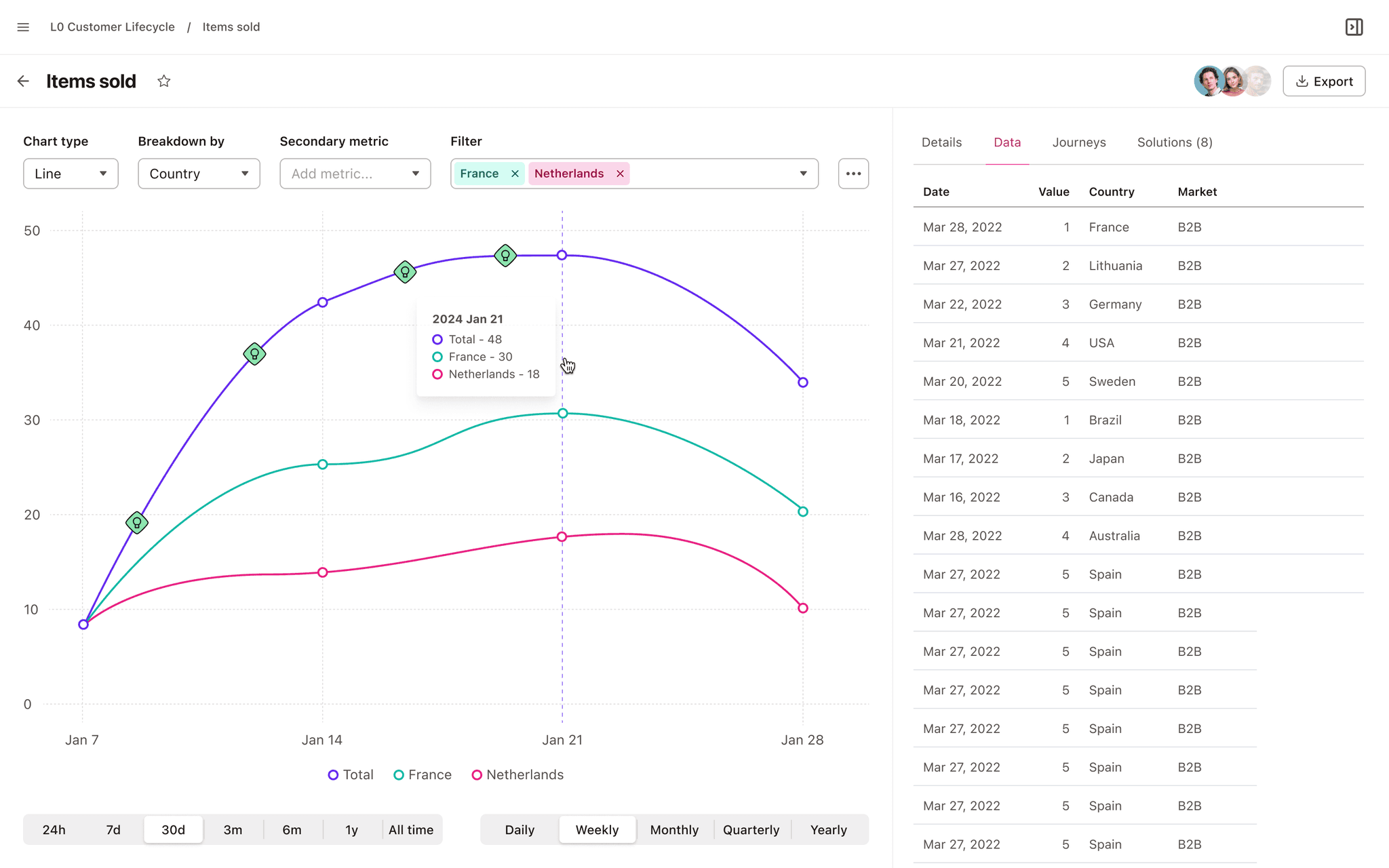
Theydo is introducing dimensions - so metrics now are not just time series, but has additional dimensions. This opens a lot of possibilities to slice, group, filter and analyze data. But it also makes UI pretty complex, especially for not so data savvy designers, which are part of our core audience.
I had designed classic UI controls a while ago, but I was encouraged to explore further. What if we introduce AI here, to simply user interactions?
Solution
AI is great. If it works. And it sucks if it doesn't. How do we know if it will work? We prototype!
In the old days Figma was a tool for that. Enter AI era. Figma prototype can go only that far:
Step 1. Chat box.
Step 2. Enter prompt.
Step 3. Done.
This way of working is just not fit for the job. Of course it's cool if user enters in natural language what she wants. And then gets what she wants. There is no uncertainty here.
What's way more crucial to answer:
Will she get what she wants?
Will she be disappointed, confused or misled?
Is this technically feasible?
Which model it requires? At the time of writing gpt4-o-mini is 20-30x cheaper than Claude Sonnet 3.5 (depends on which tokens you count). Add to this how much context you're sending into LLM and difference between two solutions can go into 100x zone.
The prototype gave us a lot of confidence - this approach will work. It won't produce bullshit (a.k.a. hallucinations), as the data won't even reach LLM. And it won't cost a fortune. The solution looks obvious in hindsight. But it was not like that before the prototyping.